SEO · 80/20 RULE
The 80/20 Rule for SEO (Pareto Principle for Small Business)
Four activities drive roughly 80% of SEO results for small businesses in Bath. The other 20% is the long tail of stuff that does not move the needle. Here is what to focus on.
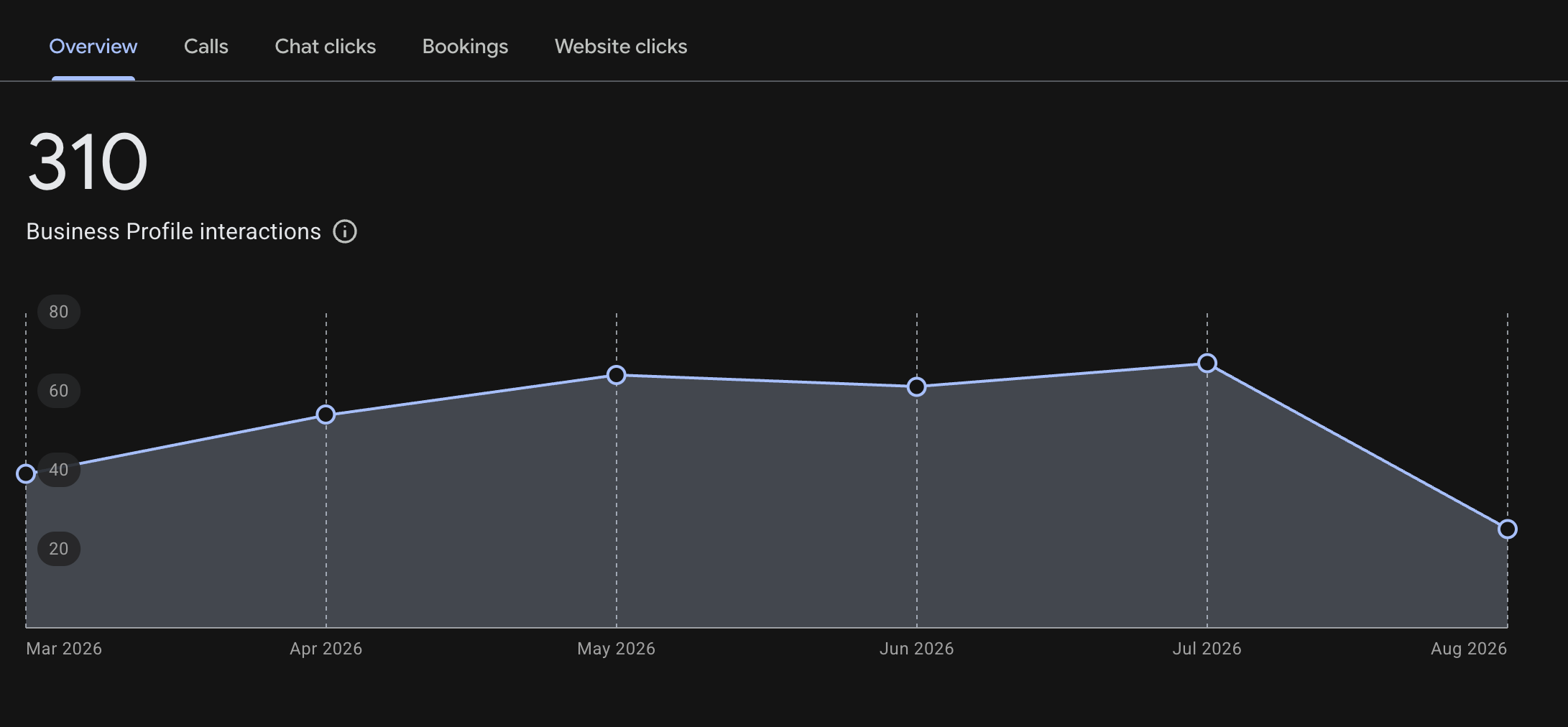
The 80/20 rule (Pareto principle) applies to almost everything in business. SEO is no different. For most small businesses in Bath — cafés, salons, accountants, indie shops, dog groomers — about 80% of the SEO result comes from four activities that take maybe 20% of the time most agencies spend. The other 80% of agency time goes on activities that move the needle by about 20%. Knowing which is which is the difference between spending £300 a month on SEO and getting nowhere, and spending £300 a month and ranking in the Map Pack.
For a Bath small business, the 20% that drives 80% of results is:
- Google Business Profile, fully completed and active
- Reviews — quantity, recency, and reply rate
- On-page SEO on a handful of pages (homepage + 1 page per service)
- A small number of high-quality local citations and links
The 20% that does 80% of the work
- Your profile
Google Business Profile, fully completed and active.
- Reviews
Quantity, recency and reply rate.
- On-page
The homepage and one page per service.
- Citations
The same name, address and phone everywhere.
Everything else — schema markup tweaks, blog posts that nobody reads, technical audits with 47-line recommendations, page-speed micro-optimisations, link-building campaigns — is the 80% of effort that drives 20% of result. Important at scale, useless for a one-location small business competing for the Map Pack.
1. Google Business Profile (the biggest single lever).
For Map Pack rankings, the profile does more than anything else. Not the website, not backlinks, the profile. Most Bath small businesses I audit have one that is half-filled in: name, address, phone, and maybe one category. To hit the 80/20 of GBP work you actually need:
- Every field filled in (hours, services, attributes, opening date, accessibility info)
- The right primary category — not "consultant" or "company" but the specific term people search for ("café", "accountant", "dog groomer")
- 5-10 photos uploaded, refreshed every month or two (Google rewards recency)
- Weekly Google Posts — short updates, offers, new products. The ones that disappear after 7 days, that almost nobody sees. They are not for the customers — they are a ranking signal to Google.
Two hours of work, every month. That is the lever.
2. Reviews (the second biggest lever).
Reviews are the only Map Pack ranking factor you cannot directly control. But you can influence the inputs:
- Ask every customer, at the point of sale. Not a generic email two weeks later. In person, while they are still happy. "If you have a minute, a Google review would really help us" — said by the owner, not a staff member.
- Reply to every review — good and bad. Google treats review velocity and owner response as signals of an active business.
- Aim for one new review per week — for a Bath café with 20 covers a day, this is one customer out of 140. Not hard. Most small businesses leave it on the table.
- Include location and service in the review prompt — "if you mention what you ordered and that you came in from Widcombe, that really helps other locals find us." Most reviewers will oblige when asked directly.
Three years in, the businesses that win the Map Pack in Bath have 50+ reviews averaging 4.8+. The ones stuck on page 2 have 8 reviews averaging 4.2.
3. On-page SEO (the website piece).
For a small business, the on-page work that matters fits on one page per service. For a Bath dog groomer, that means:
- Homepage — name, town, primary service, phone number above the fold. About 300 words of natural copy that mentions the town, the service, and what makes you different.
- One page per service — "Dog Grooming Bath", "Nail Trimming Bath", "Puppy First Groom". Each 400-600 words. Real photos of real dogs (not stock). Local proof (reviews, before-and-after).
- Service area mentioned — Widcombe, Larkhall, Oldfield Park, Bear Flat, Bathwick, Twerton. Not a separate page per town (that is what agencies sell to look busy), just mentioned naturally in the copy.
- No blog (yet) — for a small business, a blog you cannot keep up is worse than no blog. Save it for when you have staff time.
That is it. Five to ten pages, each focused on a different service. The site should take two weeks to build and not need a developer to maintain.
4. Local citations and links (the small-but-real lever).
The big agencies will tell you this is 80% of SEO. For national rankings, yes. For Map Pack rankings, they matter far less than the profile and reviews. What matters is consistency: same name, address, phone number on Yell, Yelp, TripAdvisor, Bing Places, Apple Maps, the local Bath directory, and any trade-specific directory.
Beyond that, one or two real local links matter more than 50 cheap directory submissions:
- Sponsor the local school fair (£100 gets you a link from the school PTA website)
- Join the Bath Chamber of Commerce (one good link + networking)
- Get featured in the Bath Chronicle or a local blog (free, if you have a story worth telling)
That is the 80/20. GBP done properly, reviews coming in steadily, a tight five-page site, and five consistent citations plus one or two real local links. Everything else is the 80% of effort that small businesses cannot afford to spend.
What to actively ignore (the 80% that does not move the needle for a small business):
- Monthly blog posts — only valuable once the rest is right. Premature blogs are the most expensive mistake small businesses make.
- Schema markup beyond the basics — LocalBusiness schema helps. CustomArticle schema for every blog post does not.
- International or national link-building — irrelevant for a Bath-only Map Pack campaign.
- Page-speed optimisation past "loads in under 3 seconds" — the difference between 1.2s and 0.8s does not affect your ranking or your conversions. The difference between 5s and 3s does.
- A custom Content Management System — you should be able to update your own site without ringing a developer. But you do not need a £5,000 bespoke CMS. WordPress is fine. Or, ideally, a static site with a free editor.
- Monthly reports longer than one page — the only metrics that matter are: where do you rank, how many calls did you get, how many new reviews. Everything else is noise.
How to tell if your current SEO is doing the 80/20 or the 80%.
Three questions:
- Is your Google Business Profile 100% complete with weekly posts? If not, the biggest lever is being ignored.
- Are you averaging at least one new Google review per week? If not, the second biggest lever is being ignored.
- Does your website have one page per service, with the town name in the headline and copy? If not, the third biggest lever is being ignored.
If the answer to any of those is no, fix it before spending on anything else. That is the 80/20.
The honest summary. For most Bath small businesses, four activities drive 80% of the SEO result. They are unglamorous, they do not need an agency, and they take maybe 4-6 hours a month total. Everything else — the technical audits, the link-building campaigns, the monthly reports, the schema tweaks — is the long tail of work that matters at scale but does not move the needle for a one-location small business. Get the four right first. Then decide if you need an agency for the rest.
FAQs
Common questions
What is the 80/20 rule for SEO?
The Pareto principle applied to SEO: about 80% of small-business SEO results come from 20% of the work. For a Bath small business, the 20% is (1) a fully completed and active Google Business Profile, (2) consistent Google reviews, (3) a tight five-to-ten-page website with one page per service, and (4) consistent local citations plus a couple of real local links. Everything else — technical audits, monthly blog posts, schema tweaks, link-building campaigns — is the 80% of effort that drives only 20% of result.
How much should a small business spend on SEO?
Below about £150 a month you are paying for very little actual work; above £1,000 you are usually paying agency overhead rather than more work. SEO Kings plans are £200, £300 and £400 a month, month to month with no contract.
Is SEO worth it for a small business?
For a business that serves customers nearby, usually yes — and it is measurable, which is the fair test. A Bath café, salon, or accountant holding a Map Pack place is found by people searching with intent to buy that day, and the Map Pack takes most of the clicks on local searches. Less clear-cut for a business with no local element or one being sold national rankings its customers never search for.
How long before SEO works for a small business?
Map Pack movement usually shows within 2-6 weeks for small businesses. Full organic ranking effects compound over 3-6 months. If an agency promises page-1 rankings in 30 days for a small business, treat that as a sales pitch, not a forecast.
Related pages
- SEO · 5 min readBest SEO Agencies in Bath — How to Choose the Right Partner
- SEO · 5 min readWhat a Free SEO Audit in Bath Should Actually Include
- SEO · 5 min readHow to Get More Google Reviews in Bath (Without Begging)
- Local tips · 2 min readWhy Bath Homeowners Struggle to Find a Builder for Period Properties
FREE · NO OBLIGATION
Want a free read of your website and Google Business Profile?
We will tell you exactly where you rank, what is missing, and what you can do this week to fix it. No contract, no follow-up loop.